

Image Credit – Hema
The urea cycle is one of the most important metabolic pathways in the human body. Often overlooked outside scientific and medical discussions, this cycle plays a crucial role in detoxifying ammonia—a waste product formed when proteins are broken down. Without the cycle, ammonia would rapidly accumulate to dangerous levels, leading to severe neurological damage and even death. In this article, we’ll explore what the cycle is, why it matters, and how it works step-by-step.
Understanding the Urea Cycle: A Complete Guide
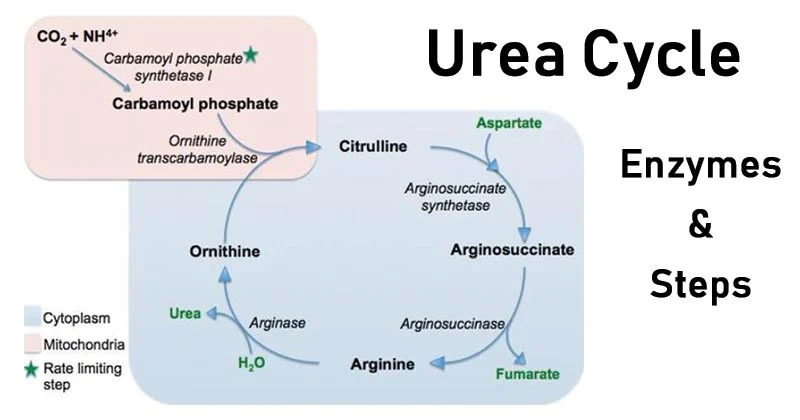
The urea cycle, also known as the ornithine cycle, is a biochemical pathway that converts toxic ammonia into urea. Urea is a far less harmful compound that can be safely transported in the blood to the kidneys and eliminated from the body through urine. This process primarily occurs in the liver, making the liver a central organ in nitrogen metabolism.
Because ammonia is produced whenever proteins are metabolized, the cycle is constantly active. In healthy individuals, this ensures that nitrogen waste is efficiently handled, preventing toxic buildup.
Importance
The primary function of the cycle is ammonia detoxification, but its importance doesn’t end there. The cycle also helps maintain the body’s nitrogen balance, which is essential for:
- Cellular growth and repair
- Hormone production
- Enzyme function
- Maintaining acid-base stability
When the cycle functions properly, the body can process protein intake efficiently. When it malfunctions, the consequences can be life-threatening. This is why understanding the urea cycle is especially important in medical fields dealing with liver disorders, metabolic diseases, and pediatrics.
Works: Step-by-Step
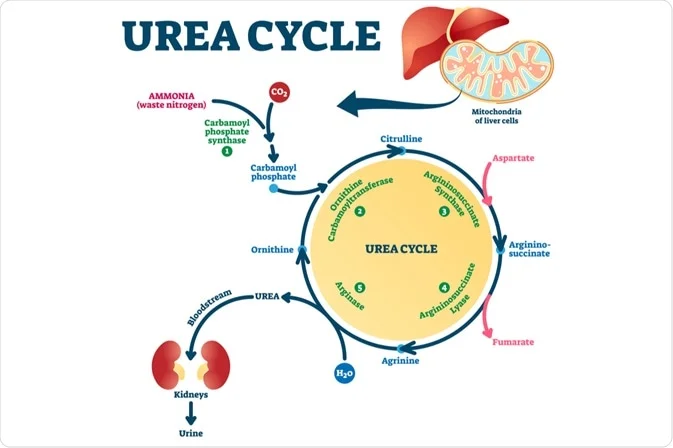
The cycle consists of five main steps, each involving specific enzymes and occurring either in the mitochondria or cytosol of liver cells.
1. Formation of Carbamoyl Phosphate
The cycle begins inside the mitochondria. Ammonia combines with carbon dioxide in a reaction catalyzed by the enzyme carbamoyl phosphate synthetase I (CPS I). This forms carbamoyl phosphate, kickstarting the urea cycle.
2. Production of Citrulline
Carbamoyl phosphate interacts with ornithine to form citrulline. The citrulline is then transported out of the mitochondria into the cytosol.
3. Formation of Argininosuccinate
In the cytosol, citrulline combines with aspartate in a reaction catalyzed by argininosuccinate synthetase. This forms argininosuccinate, a key intermediate in the urea cycle.
4. Splitting of Argininosuccinate
The enzyme argininosuccinate lyase splits argininosuccinate into two products: arginine and fumarate. Fumarate enters the Krebs cycle, demonstrating the remarkable interconnectedness of metabolic systems.
5. Formation of Urea
Finally, arginine is broken down by the enzyme arginase to produce urea and ornithine. The ornithine reenters the mitochondria to start the cycle again, and the urea is transported to the kidneys for excretion.
Urea Cycle Disorders
Genetic mutations can impair any of the enzymes involved in the urea cycle. These conditions, known as urea cycle disorders (UCDs), can lead to dangerously high ammonia levels. Symptoms may include:
- vomiting
- lethargy
- irritability
- confusion
- seizures
Early diagnosis and dietary management are critical for individuals with UCDs.
Conclusion
The urea cycle is essential for removing ammonia from the body and maintaining nitrogen balance. Although it operates silently within the liver, its impact on overall health is profound. Whether you’re a student, a healthcare professional, or simply curious about human biology, understanding the cycle offers valuable insight into how the body handles protein metabolism and waste elimination.
Frequently Asked Questions
What is the urea cycle?
The urea cycle is a metabolic pathway in the liver that converts toxic ammonia into urea, which is then safely excreted in urine.
Why is the urea cycle important?
It prevents ammonia buildup in the body, maintains nitrogen balance, and supports vital functions like protein metabolism and cellular health.
Where does the urea cycle occur?
The urea cycle takes place mainly in the liver, with some steps occurring in the mitochondria and others in the cytosol of liver cells.